Managed Agents: The End of Building Agent Infrastructure From Scratch?
The model was never the hard part. The runtime was. Learn why managed agents are the operating system layer for what comes next.

V Chaitanya Chowdari
The End of Building Agent Infrastructure From Scratch?
For years, building AI agents looked exciting in demos and painful in production. You needed tool execution, state management, retry systems, secure environments, context compression, session memory, monitoring, authentication, sandboxing, and orchestration.
The model was never the hard part. The runtime was. That’s where Managed Agents changes the game.
🌊 The Shift Nobody Talks About
Most people think AI progress comes from smarter models. But the bigger unlock may be something else: Moving from building agent loops to operating agent systems.
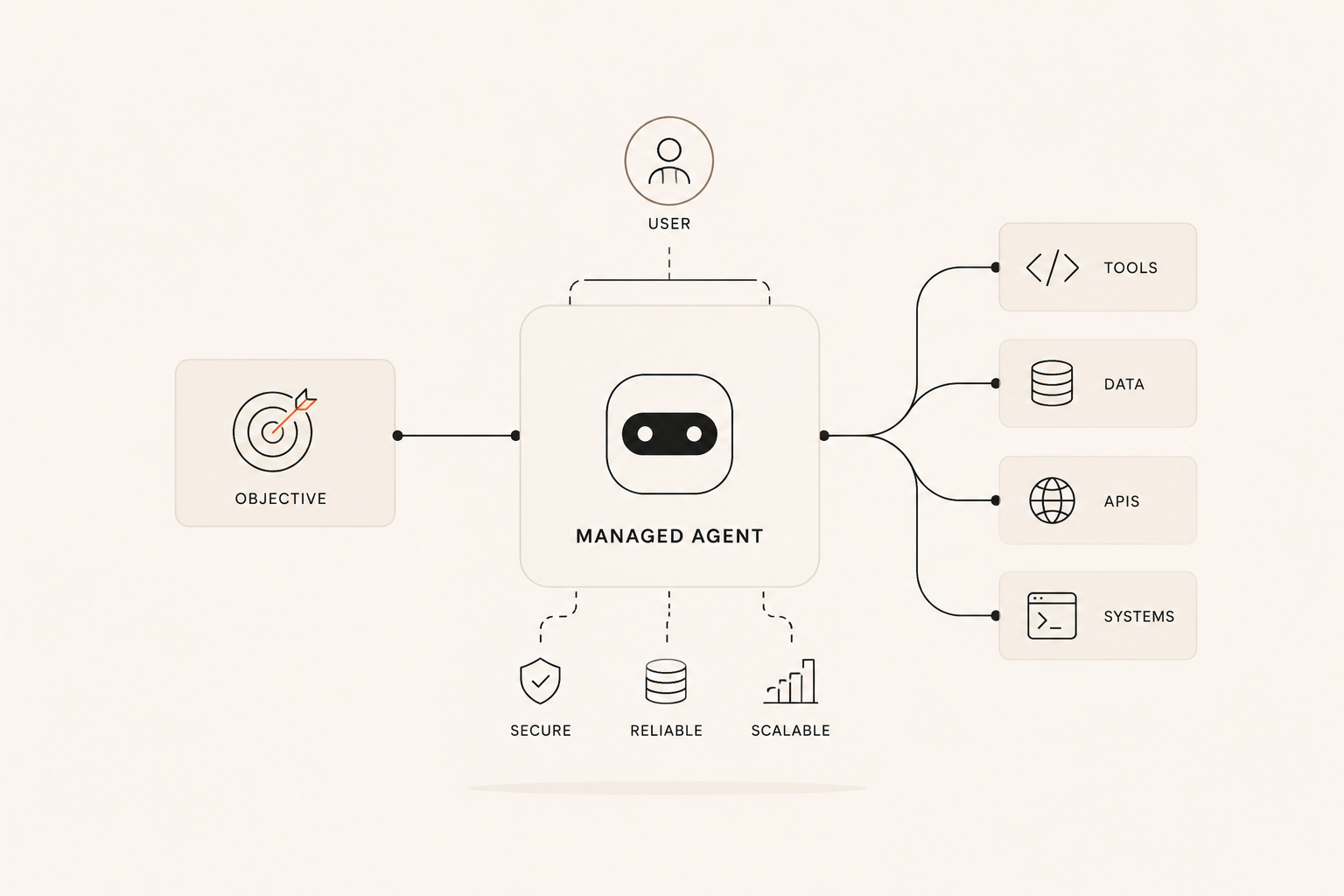
Managed agents represent a different philosophy: Instead of building the infrastructure around the model, you define outcomes. The platform handles execution.
🤖 What Is a Managed Agent?
A managed agent is an AI system where the infrastructure layer is abstracted away.
You don’t manually manage: × Agent loops × Runtime environments × Tool orchestration × Session lifecycle × Execution recovery
Instead, you define: ✓ Objective ✓ Context ✓ Permissions ✓ Tools ✓ Constraints
Think of it like this: Cloud computing is for servers; Managed agents are for AI execution.
🏗️ Old vs. New Architecture
The Old Way (Custom Stack)
Traditional agent stacks required every team to rebuild the same systems: Application → Custom Agent Loop → Tool Layer → Memory Layer → Execution Runtime → Sandbox → Infrastructure.
The New Way (Managed Stack)
 Application → Agent Runtime → Execution Environment → Tools → Infrastructure. Much smaller, faster, and easier to maintain.
🧠 Decoupling The Brain From The Hands

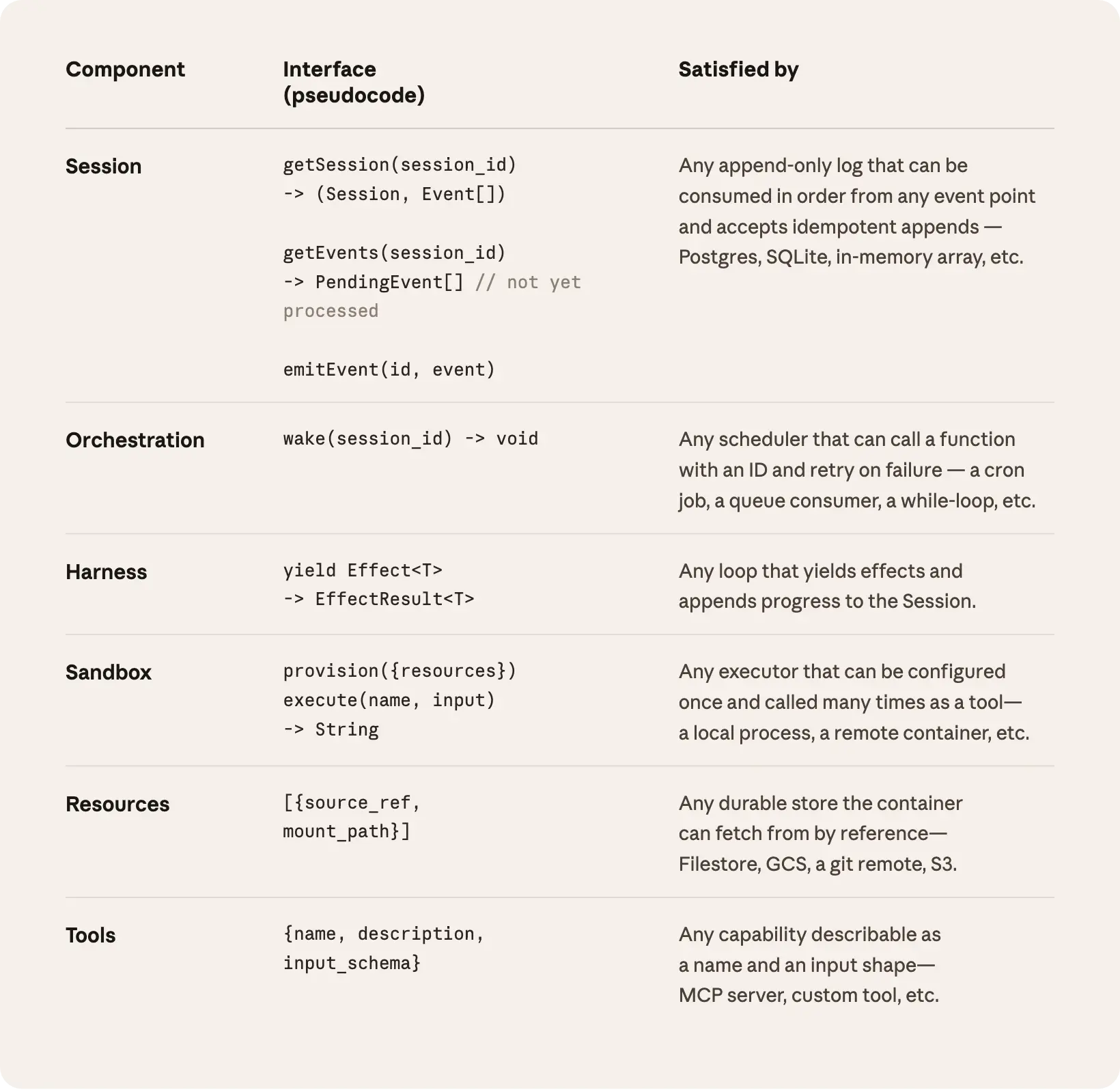
One of the strongest concepts behind modern agent systems is separating reasoning from execution:
- The Brain: Makes decisions.
- The Hands: Execute actions.
- The Runtime: Coordinates safely.
This separation allows for better scaling, more reliability, lower engineering overhead, and easier upgrades. Your execution layer evolves independently from model intelligence.
🚀 Why This Matters For Startups
Startups lose months building infrastructure. Reality: Users don’t care about your orchestration layer; they care about outcomes.
Managed architectures unlock:
- Faster MVPs: Weeks instead of months.
- Smaller Teams: Less infrastructure burden.
- Better Reliability: Standardized execution.
- Easier Iteration: Improve behavior without rebuilding.
🤝 Final Thoughts
The next generation of AI products won’t look like chatbots. They’ll look like invisible systems that plan, execute, and recover to quietly get work done.
Build less infrastructure. Ship more intelligence.